
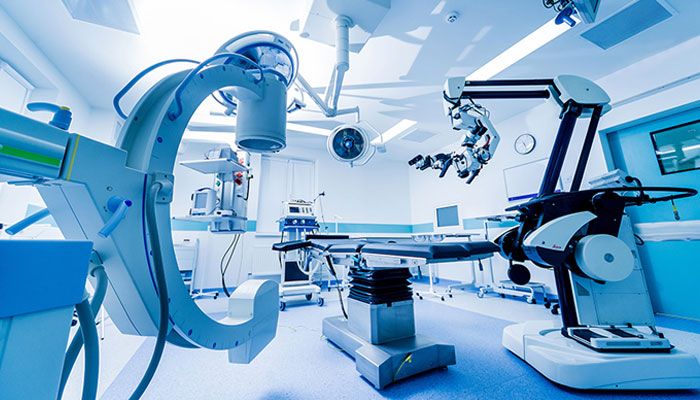
In the intricate choreography of modern medicine, where a single miscalibration can mean the difference between healing and harm, a medical contract manufacturer functions as the unseen hand that transforms vision into tangible reality. These are the entities that take the carefully wrought designs of medical device innovators and breathe physical life into them, translating blueprints and specifications into instruments that will one day enter operating theatres, diagnostic laboratories, and hospital wards. The relationship between device company and manufacturer resembles, in many ways, the relationship between an organ and its supporting vasculature. One cannot function without the other, and the integrity of the whole system depends upon the reliability of each component part.
The Architecture of Trust
Trust in medicine is not abstract. It is built upon systems, protocols, and an almost obsessive attention to detail. When a surgeon reaches for an instrument during a procedure, she does not pause to question whether it will perform as expected. When a cardiologist implants a device, he assumes it will function within the narrow parameters upon which a patient’s life depends. This chain of trust extends backward through time and space to the manufacturing floor where these devices took their final form.
A medical contract manufacturer inherits this responsibility. The manufacturer must create environments where contamination becomes nearly impossible, where processes repeat with mechanical consistency, where every deviation from the expected path triggers investigation and correction. The burden is considerable, yet it mirrors the fundamental imperative of medicine itself: first, do no harm.
Singapore’s Manufacturing Excellence
Consider Singapore, an island nation that has cultivated expertise in medical manufacturing with the same deliberation a gardener might tend a delicate ecosystem. Singapore’s medical contract manufacturer sector has flourished not through accident but through systematic investment in the infrastructure of quality. The nation recognized early that manufacturing medical devices required more than machinery and floor space. It required a culture of precision, regulatory frameworks aligned with global standards, and a workforce trained to understand that their work directly impacts human health.
The facilities that have emerged reflect these commitments. They maintain clean room environments classified according to particle counts and air exchange rates. They implement quality management systems that document every significant decision and action. They submit to regular audits by regulatory authorities who verify that practice matches procedure. The sector has become a model of how small nations can compete in high-value manufacturing through excellence rather than scale.
The Elements of Excellence
What distinguishes a top-tier medical contract manufacturer from a merely adequate one? The differences manifest across multiple dimensions:
- Regulatory compliance that extends beyond minimum requirements to embrace best practices from multiple regulatory regimes including the United States FDA, European Medical Device Regulation, and ISO 13485 standards
- Quality systems that treat deviations not as nuisances but as opportunities to improve processes and prevent future issues
- Technical capabilities spanning materials science, precision manufacturing, and advanced testing methodologies
- Clean room facilities maintained to standards appropriate for the device classification and intended use
- Sterilisation expertise using validated methods whether through steam, ethylene oxide, or radiation
- Documentation practices that create complete traceability from raw material through finished device
- Supply chain resilience with qualified backup sources for critical materials and components
- Continuous improvement culture where staff actively seek ways to enhance quality and efficiency
These elements interconnect like the organs in a living body. Remove one, and the entire system weakens.
The Science of Consistency
Medicine values consistency with an intensity born of necessity. A drug must deliver the same dose whether manufactured in January or July. An implant must perform identically whether it is the first from a production run or the thousandth. Achieving this consistency requires understanding variation at its most fundamental level.
Statistical process control monitors manufacturing parameters in real time. Control charts track measurements over time, revealing patterns that might indicate impending problems. Validation studies prove that processes reliably produce acceptable results. These tools, borrowed from industrial engineering but adapted to medicine’s exacting requirements, allow manufacturers to achieve levels of consistency that would have seemed impossible to earlier generations.
The attention extends to the molecular level. Biocompatibility testing ensures materials will not provoke adverse reactions when they contact blood or tissue. Mechanical testing verifies that devices can withstand the stresses they will encounter in use. Sterility assurance level calculations provide mathematical certainty that contamination has been reduced to acceptable probabilities.
The Human Element
Yet for all the systems and protocols, medical device manufacturing ultimately depends upon human judgment and skill. Operators must recognize when equipment behaviour suggests impending failure. Quality inspectors must discern subtle defects that automated systems might miss. Managers must decide when investigation is warranted and when variation falls within expected bounds.
The best medical contract manufacturers cultivate this human expertise systematically. They provide ongoing training. They create cultures where speaking up about concerns is rewarded rather than punished. They recognize that regulatory compliance and production efficiency, far from being opposing goals, reinforce each other when properly understood.
The Imperative of Reliability
In medicine, reliability is not merely desirable but essential. A diagnostic device that produces erroneous results endangers patients. A surgical instrument that fails mid-procedure creates crisis. An implant that degrades prematurely necessitates additional surgery. The stakes could not be higher, and the margin for error could not be narrower.
This is why the selection of a medical contract manufacturer represents one of the most consequential decisions a medical device company makes, a choice that will ripple forward through every device produced, every patient treated, every life touched by the technology that emerges from that partnership between vision and execution, between design and reality.