

Demolishing a building isn’t just a matter of swinging a wrecking ball and hoping for the best. In the world of complex structures, every cut, crack, and collapse risks triggering a domino effect. The science of structural calculations is what stands between a controlled deconstruction and a catastrophic failure.
Why Are Structural Calculations Essential During Complex Teardowns?
Tearing down a building challenges engineers to think in reverse, stripping away the supports and connections that once created stability. Unlike new construction, where each addition strengthens the whole, demolition exposes vulnerabilities at every step. Without precise calculations, even a minor misjudgment can lead to partial collapses, endangering workers and surrounding properties. These calculations ensure that, as each piece is removed, the remaining structure can handle the shifting loads and stresses.
What Unique Challenges Do Teardown Phases Present?
The teardown phase introduces instability that designers never intended. Walls, beams, and columns are gradually removed, sometimes releasing hidden stresses or exposing weaknesses. Each phase creates a temporary configuration that might have never existed during the building’s original lifespan. This means standard design assumptions often no longer apply.
How Do Intermediate Stability States Differ from Original Design Assumptions?
During construction, engineers anticipate how a structure will stand as a finished whole. But demolition creates several “intermediate states” that can be unpredictable. For example, a supporting wall might be removed before an adjacent floor slab, leaving the slab vulnerable to bending or twisting. Structural engineers must recalculate load paths for each stage, often analyzing scenarios never considered in the initial design.
How Is the Demolition Sequence Planned to Maintain Stability?
Sequence is everything. Before a single wall comes down, a meticulous plan outlines the order of removal, specifies where temporary supports will go, and details how each operation impacts the rest of the structure. This choreography prevents overloading remaining members and ensures nothing is left to chance.
What Criteria Determine the Order of Element Removal?
Engineers assess which elements provide critical support and which can come down safely. They consider load distribution, connection types, and nearby hazards. Factors like weather, vibration from nearby traffic, and even the weight of demolition equipment are part of the equation.
How Are Temporary Supports Integrated into the Sequence?
Temporary supports (also called shoring) are strategically placed before critical elements are removed. Their placement and design depend on real-time load calculations and anticipated shifts in structural behavior. Shoring is not a guesswork operation; it’s the result of precise calculations and experience.
What Methods Ensure Stability Analysis Throughout the Demolition?
No reputable project relies on a single calculation and moves forward blindly. Stability is checked and rechecked at every stage to catch new risks as the building’s shape morphs.
How Is Structural Integrity Verified at Each Intermediate Stage?
Detailed “notes de calcul” (calculation notes) document the expected behavior of the structure after each removal. On-site inspections and sometimes real-time sensors verify that reality matches theory. If discrepancies appear, methods are adapted immediately.
What Tools and Techniques Are Used for Ongoing Stability Assessment?
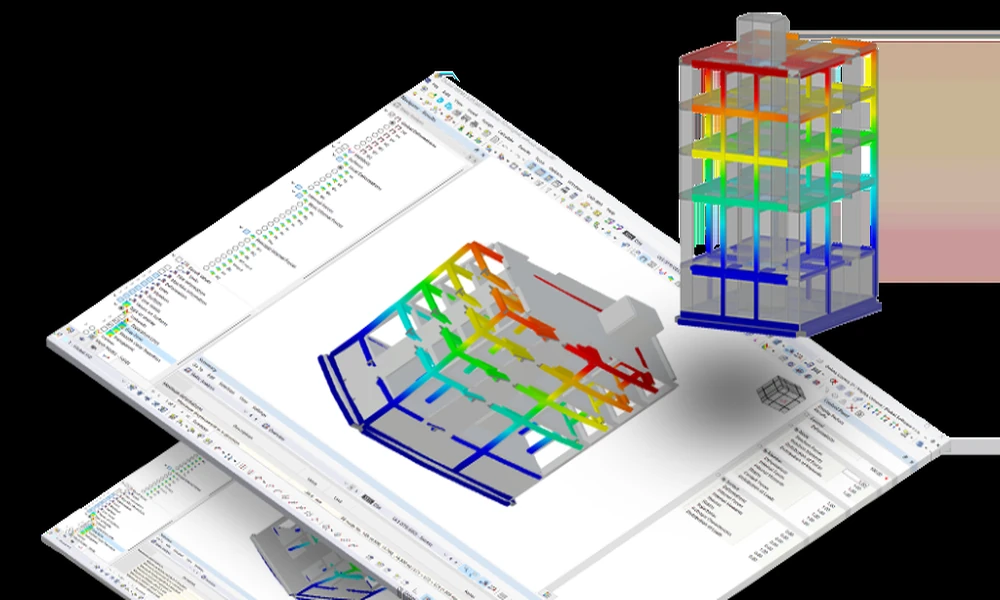
Modern demolition projects often employ digital modeling and simulation tools to predict how the structure will respond at each phase. These models are updated as demolition progresses, allowing engineers to adjust their approach if actual conditions differ from expectations.
What Role Do Temporary Structures Play in Preventing Collapse?
When a building’s own supports disappear, engineered shoring steps in. These temporary structures act as the skeleton’s replacement, holding up floors, walls, or roofs until permanent removal or a new load path is established.
How Are Temporary Supports Designed and Positioned?
Designing shoring requires as much rigor as the original structure. Engineers factor in all potential loads, possible movements, and the sequence of removal. Supports are positioned where the risk of instability is highest, never relying on intuition alone.
How Is Load Redistribution Managed During Teardown?
When an element is removed, its load must be safely transferred elsewhere. Engineers use calculations to determine where that load will go and ensure the receiving members or supports can handle it. This process is repeated step by step, ensuring safe redistribution at every phase.
Which Documentation and Calculations Are Critical for Compliance and Safety?
Every decision and calculation is meticulously recorded. This documentation is not just for internal use; it forms an essential part of regulatory compliance and project sign-off.
What Are the Key Components of a Demolition Method Statement?
A comprehensive method statement includes a step-by-step sequence, locations and specifications for temporary supports, risk assessments, and contingency plans for unexpected structural behavior.
How Are Notes de Calcul and Execution Plans Utilized?
These documents provide the mathematical backbone of the operation, proving that every aspect has been considered and validated. Detailed drawings and sketches accompany the numbers, guiding teams on the ground.
Why Are Attestations of Conformity Necessary?
Attestations confirm that the work follows the approved plan and complies with legal and safety requirements. They provide accountability and peace of mind to clients, inspectors, and the public.
For example, consulting with an ingénieur étançonnement NadeauSDM ensures that shoring and temporary works are not just compliant, but tailored to the specific challenges of each project.
How Does Construction Sequencing Influence Stability Compared to Demolition?
Building up and tearing down demand opposite approaches. Construction typically strengthens stability with each new addition, while demolition removes key elements, increasing the risk of collapse with every step.
What Are the Differences in Load and Support Considerations?
During construction, loads gradually increase, and supports are added accordingly. In demolition, loads shift unpredictably, and supports must be dynamically adapted or removed.
How Are Beam Placement and Formwork Removal Coordinated Safely?
In construction, careful sequencing ensures beams are supported as formwork is stripped away. In demolition, similar care is taken but in reverse, temporary structures must be added before permanent supports disappear.
What Lessons Can Be Drawn from Stability Failures in Teardown Projects?
History is littered with examples where a lack of detailed analysis led to disaster. Failures typically stem from underestimating load redistribution, inadequate shoring, or poor documentation.
Common Pitfalls and How Structural Calculations Prevent Them
– Ignoring hidden connections or load paths
– Relying on visual cues instead of calculations
– Failing to update plans as the structure changes
Thorough structural calculations catch these issues before they become catastrophic.
Case Studies Highlighting the Importance of Accurate Analysis
Past incidents, such as partial collapses during urban teardowns, underline the need for expertise and rigor. Each serves as a reminder: every phase is a fresh challenge needing its own analysis.
Future Trends in Structural Calculations for Complex Teardowns
Tomorrow’s demolition sites will rely even more on technology. Advances in modeling and analysis will allow for safer, more efficient, and more predictable teardowns.
Advances in Modeling and Simulation Technologies
From 3D modeling to AI-enhanced simulation, new tools will provide real-time insights into how structures behave as they’re dismantled, allowing for adjustments on the fly.
Integration of Real-Time Monitoring During Demolition Phases
With sensors and live data, engineers will catch potential failures before they happen, keeping both workers and the public safer than ever before.
Careful planning, precise calculations, and a commitment to documentation are what keep controlled chaos from becoming real chaos. In the complex world of demolition, these principles are quite literally the foundation for safe dismantling.